
Fatigue, Residual Life & Crack Assessment
When NDT finds a crack, the most important question is simple: how much strength and stiffness has the component actually lost, and is it still safe to operate?
We answer that question with a clear, practical FEA assessment that are carried out using practical FEA and fatigue methods, including the FKM Guideline where it is the appropriate basis for residual life and component assessment.
What you receive
- A clear percentage of remaining stiffness and load-carrying capacity compared with the intact component
- Visual comparison of the cracked vs uncracked model under the same service loads
- Practical recommendation: continue operating, monitor, repair, or replace
- Engineering report written in plain language for captains, owners and technical managers
How the assessment works
- Receive the NDT data:
Crack size, location, orientation and photos from the inspection. - Build two models:
One intact (uncracked) component and one with the actual crack. - Run the FEA comparison:
Apply representative service loads and compare stiffness, stress and load-carrying capacity. - Deliver clear results:
Remaining stiffness/strength percentage + practical recommendation (operate / monitor / repair / replace).
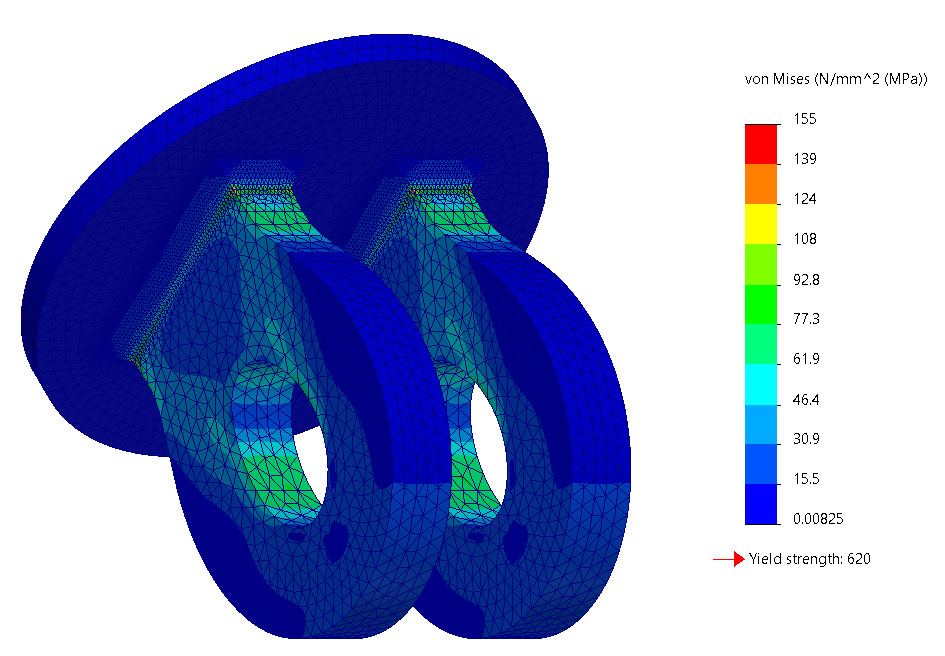
Welded lug support for a marine rigging test bench — 3D model used for fatigue and weld assessment
Ready to assess a cracked component?
Send us the NDT report (crack size, location and photos) and basic information about the component and its service loads.
We will review it and propose a clear assessment approach.